
2025 Profit Sharing Improves by 50% over 2024 for the Independent Agent Industry
As an agency professional, does it feel like you are starting to emerge from the chaos that was the hard market? The numbers would say that’s the case.
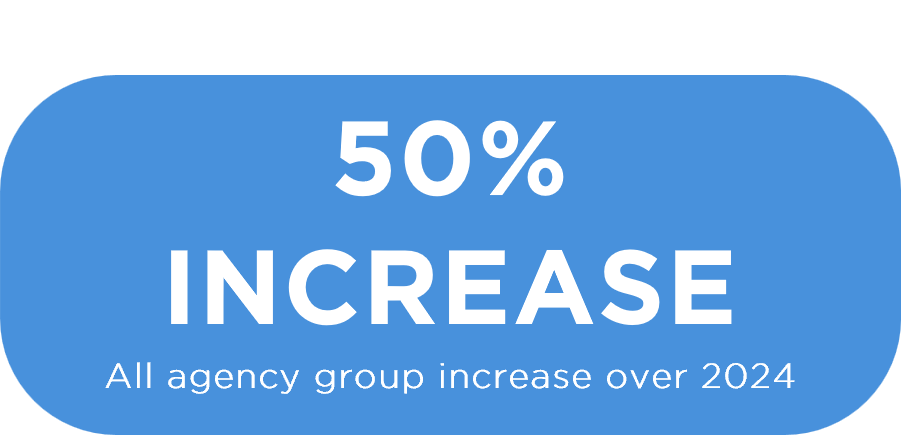
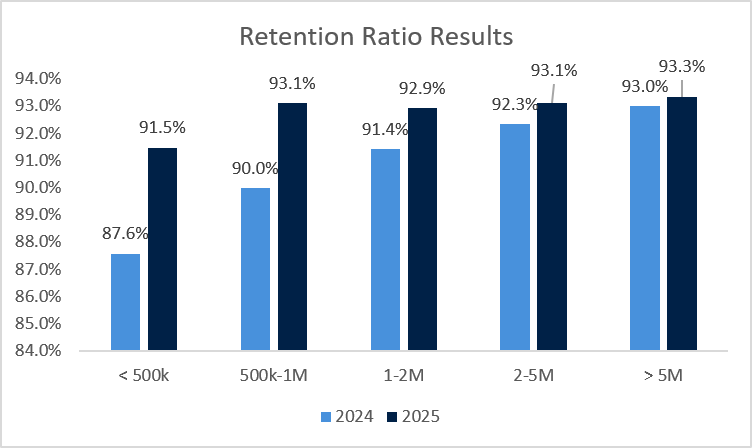
In 2025, every revenue group experienced a decreased loss ratio from 2024, and every group’s retention rate increased. As a result, every revenue group we analyzed saw contingency revenue increase over 2024. In aggregate, contingency revenue was up 50% in 2025 over 2024. What a breath of fresh air for agencies.
Agencies need to continue to build their budgets as if contingency revenue will be $0. There are still too many businesses that run such tight margins that they need contingency checks to be profitable.
Last year, IA Valuations conducted a study finding that agents should target a 24.5% profit margin without contingencies to be in line with the average agency. This remains true today. If an agency can be disciplined in their approach, then they will be profitable in the valley of the hard market and on the mountain top of underwriting profitability.
As the market softens, the focus of carriers is going to change from retention to growth. Thus, the agents who have prided themselves on a stable ,book will feel increased pressure to grow. From IA Valuations’ perspective, we see increased scrutiny of organic growth. An agency should celebrate its returns to profitability, but now it needs to shift its focus to the next challenge: growth.
Agency Contingency Results
Contingency Performance Rebounds!
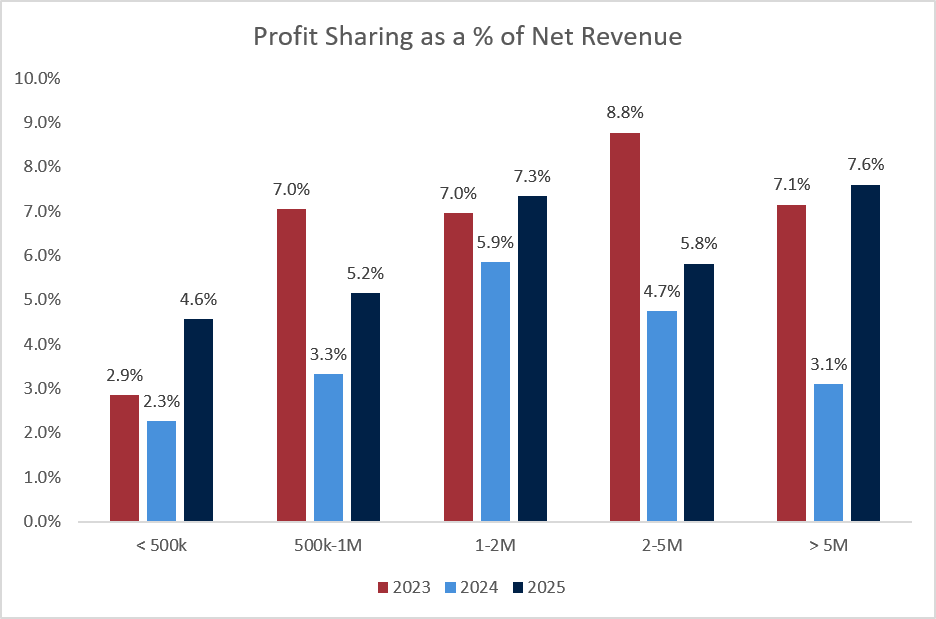
2025’s results represent profit sharing earned in 2024. 2024 was the first P&C industry underwriting gain year since 2020, and that contributed to every revenue group experiencing an average increase in profit-sharing. The P&C industry’s underwriting gain was over $22B, so profit reached agencies again.
Overall Performance from 2024 – 2025
In 2024, the average contingent revenue across all groups was a historically low 3.8%. In 2025, that rebounded to 5.7%, marking a 50% year-over-year improvement. This recovery coincides with an inflection point in the P&C market: following three years of hard market conditions, industry data shows meaningful softening into 2025, with the Council of Insurance Agent and Brokers’ Q2 2025 survey reporting overall premium increases declining to just 3.7%. Further, the CIAB reported in Q1 2026 an average decrease in premiums of 1.2%. This softening reflects improved carrier profitability, which is now flowing through to agency profit-sharing programs. The broad-based recovery across all five revenue groups signals that the contingent income trough has passed.
Revenue Group Insights
Shown as a percent increase over 2024
< $500k Agencies
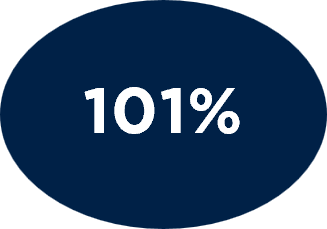
After reaching a cycle low of 2.3% in 2024, the smallest agencies posted the most significant percentage recovery in 2025, more than doubling their contingent returns. This dramatic 101% rebound reflects the lagged impact of improved carrier underwriting profitability finally reaching agencies with concentrated carrier relationships. The volatility in this segment, down 61% from 2022-2024, then up 101% in 2025, underscores the outsized impact of single-carrier dependency on contingent income stability.
$500k – $1M Agencies
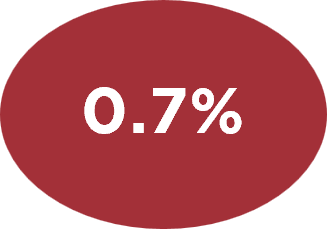
This group’s 55% recovery represents a partial reversal of the steep three-year decline that took contingent returns from 10.5% (2022) to 3.3% (2024). The 1.8% point improvement signals that mid-sized agencies are beginning to benefit from improved industry underwriting results, though at 5.2%, returns remain roughly half of 2022 levels. Agencies in this tier typically maintain 2-4 carrier contingency agreements, creating enough diversification to participate in the recovery, but insufficient scale to fully capture the upside.
$1M – $2M Agencies
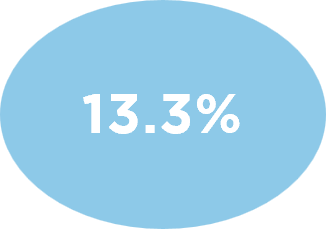
This segment demonstrated the most stable performance through the cycle, with the smallest peak-to-trough decline (7.6% to 5.9%), and now the steadiest recovery. This resilience reflects the “sweet spot” these agencies occupy – sufficient scale to maintain 4-6 carrier relationships for diversification, yet nimble enough to actively manage loss ratios through selective underwriting.
$2M – $5M Agencies
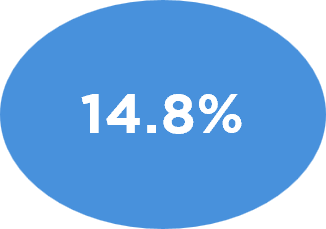
Agencies in the $2 – $5M range posted the smallest absolute recovery (1.1%), despite having experienced one of the sharpest declines, from 8.8% (2023) to 4.7% (2024). This muted rebound is notable given the segment’s scale advantages. The 5.8% return remains well below the 8.3% average from 2022 – 2023, suggesting these agencies may be facing structural headwinds in their contingent programs, potentially from lead carrier concentration, geographic CAT exposure, or shifting carrier appetites in their core mix.
> $5M Agencies
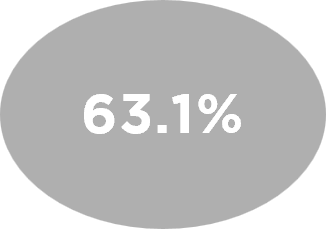
The largest agencies delivered the most dramatic recovery in both absolute (4.5%) and relative (145%) terms, jumping from 3.1% in 2024 to 7.6% in 2025. With the P&C industry’s return to profitability now flowing through to agency profit-sharing programs, large agencies are positioned to capture disproportionate upside. This group’s performance reinforces that scale creates both downside protection (smaller 2024 decline than mid-sized peers) and upside leverage.
Key Agency Metrics: Book Loss Ratio
A Comparison of Loss Ratio Performance Over 2024
Agents Contribute to the P&C Industry’s Best Underwriting Year in Decades
In IA Valuations’ experience, an agency that has a profitable book of business is a non-negotiable for carrier partners with limited forgiveness for consistent underperformance. Independent agents need to focus on two things in today’s market: profitability and growth. Nationally, the P&C industry experienced their best underwriting profit in decades and agents shared in the benefits. As carriers spend less of their energy correcting rate in a hard market, their focus will shift towards growth. As an agent, you need to be prepared to answer a question for your carrier partners: “How can you profitably grow with us?”
Independent agents, widely speaking, historically have been very strong at the profitability part, however the growth will tend to slow down as an agency and its producers age. The insurance carrier’s market grows in competition daily and that means, in order to win, they will rely on their independent agents to help capture market share. After all, in the last 10 years, carriers such as Erie, Cincinnati, and Progressive have all experienced increased market share, and they all focus on IAs as key distributors.
Agency Loss Ratio Results: Revenue Group Insights
< $500k Agencies
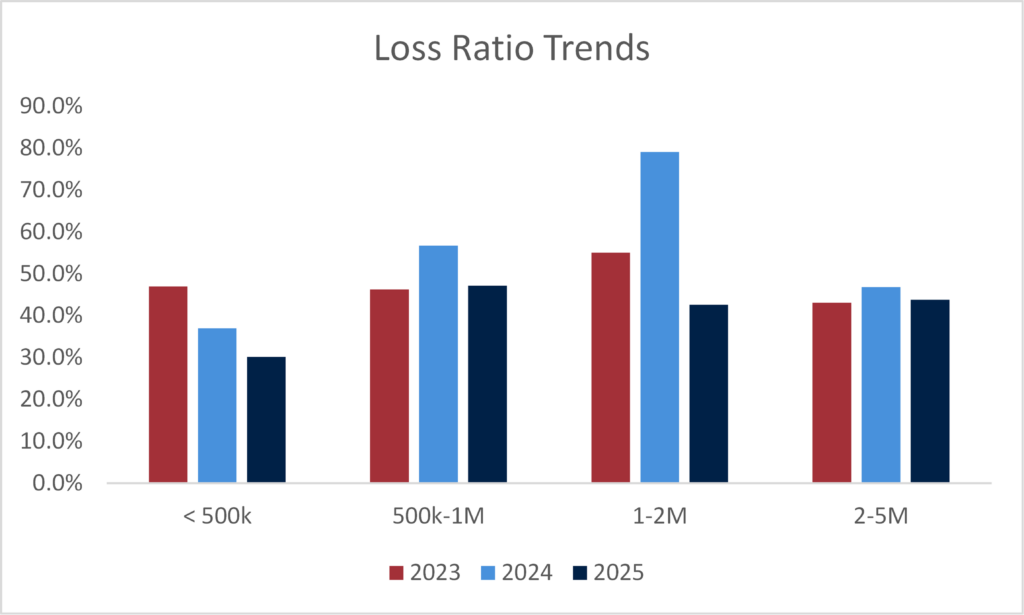
Loss ratios for the smallest agencies have shown consistent improvement over the three-year period, declining from 47.0% in 2023 to 37.0% in 2024, and reaching 30.2% in 2025, a cumulative improvement of nearly 17 percentage points.
$500k – $1M Agencies
After experiencing an uptick in loss ratios during 2024 (rising from 46.2% to 56.7%), this segment has rebounded to 47.2% in 2025 – essentially returning to 2023 levels. The 2024 spike may have been driven by isolated large claims or portfolio concentration issues that have since been addressed through improved carrier partnerships or book management. This pattern underscores the importance of maintaining diversified carrier relationships to mitigate loss ratio volatility.
$1M – $2M Agencies
The most dramatic swing occurred in this segment, where loss ratios surged to 79.1% in 2024 before plummeting to 42.6% in 2025, a 36.5% improvement. This volatility likely reflects the impact of a few large claims in 2024. The 2025 recovery brings this group back in line with historical norms and represents the lowest loss ratio of any segment in our sample.
$2M – $5M Agencies
Mid-market agencies have delivered the most stable loss ratio performance, hovering between 43.1% and 46.8% across all three years. The 2025 result of 43.8% represents a marginal improvement from 2024’s 46.8% and signals consistent underwriting quality.
> $5M Agencies
With only 2025 data available, this revenue group did not appear in the trended graph. However, this group’s loss ratio was 45.2% and is in line with other revenue groups’ performance for 2025. Agencies of all sizes appear to be benefitting from improved carrier profitability.
Key Agency Metrics: Retention Rate
A Comparison of Retention Ratio Performance Over 2024
The Hardest Metric to Get Right
If a valuator were to ask you what your agency’s retention ratio is, what would you say? How many agents know where to start?
Agents are not set up for success, and carriers are also confused on how to report this metric. In one agency valuation, Carrier A reports retention in terms of written premium, while Carrier B reports retention in terms of policies in force. Not to mention, Carriers C, D, and E don’t include any retention metrics on their production reports at all.
To make matters worse, looking at retention by carrier production reports is flawed, because if an agency has a customer that moves their policies from Carrier A to Carrier B in their agency, that hurts their retention score with Carrier A and counts as new business for Carrier B. Meanwhile, the agency has not lost a customer, it has merely changed the carrier.
IA Valuations’ opinion is that the best retention information is provided by a dataset that is carrier indifferent, usually an agency management system.
An agency management system is the only reasonable way to be able to produce this metric consistently and without intense manual effort. Valuators and agency decision-makers need to keep these nuances in mind when making judgements based on retention rates.
At this metric’s core is a question: how many of last year’s policies stayed with the agency? Retention is a way to measure the agency’s ability to build relationships, be advisors, and re-market business.
IA Valuations measures in terms of policies in force (PIFs), so retention never comes in above 100%, like it sometimes does with premium. Here is the purest retention rate forumla:
(Current Period’s PIFs – Current Period’s New Business) / Prior Period’s PIFs

From Scratch to Success
How Frank Chan Created an Excellent Agency
IA Valuations has been valuing independent insurance agencies for nearly a decade. From Palmer, Alaska to Quincy, Massachusetts, we’ve had the opportunity to evaluate the operations and financials of over 400 agencies across the country. Through this work, we have been identifying and qualifying the metrics that make an agency excellent.
This year, IA Valuations will be inaugurating its 2026 class of Excellent Agencies. This designation is given to a select group of agencies that demonstrate exceptional business performance, organizational strength, and long-term value creation. Agencies receiving this distinction have outperformed the industry in key areas of their business, specifically in profitability, sustained growth, operational excellence, and staffing quality. Just as important as book of business value, Excellent Agencies have invested in the people, processes, and organizational infrastructure necessary to support continued success.
To kick off the 2026 inaugural class of Excellent Agencies, IA Valuations interviewed Frank Chan of Chan Insurance Agency in Quincy, MA. The full class of 2026 Excellent Agencies will be revealed in our Q4 report, but we want to feature a recipient in each edition leading up to the full list. IA Valuations’ goal with these agency spotlights is to learn from these agents and inspire other agency leaders to continue the pursuit of excellence.

In our conversation, Chan chalked his success up to luck and timing, but our team knew there was more to his success story.
In Chan’s words, he “stumbled” into the insurance industry. He graduated in 1982 into a difficult job market. He was waiting tables when one of his regulars, who could see his potential, recruited him to MetLife to begin selling life insurance. At MetLife, he completed his licensing exams and gained experience in life and health insurance. He later joined New York Life, where he received additional training and continued building his industry knowledge. As he gained experience, he learned about the commission structure and appeal of property and casualty insurance. He realized he could be doing more to round out the risk needs of his clients.
In ‘84, Chan purchased his first personal computer and began building financial projections for a potential agency of his own. After running the numbers, he realized that independent P&C agency ownership could be profitable. He sought advice from local independent agents, explored market access opportunities, and even began to write some P&C business on the side, before opening the doors to his own independent agency.
He opened Chan Insurance Agency in 1986 on the edge of Boston’s Chinatown. His background in life insurance and his experience as an immigrant instilled a strong work ethic and mindset that helped him grow. Much of his business plan was, and still is, based on the original projections he made on his old desktop computer. Chan said, “I knew I could not quit. It is hard, but if you do not quit, you will make it.” Their growth has been slow but steady, all organic and referral-based. Chan is modest about their growth, but they started from scratch, and now Chan Insurance Agency writes over $18 million in premium.
While he credits good timing, he also made some smart observations and hiring decisions as he built his agency. When he opened Chan Insurance Agency, there was a large wave of Chinese immigrants coming into the Massachusetts community. This being his cultural background, he built a professional niche around his community. He also started hiring people from his own community, taking chances on people who didn’t have insurance experience; he just needed help answering the phones. One of his first hires, Vicky, is still with the agency today. He hired her purely for her typing skills, and she has grown with the agency for over 30 years. Vicky’s story emphasizes a key theme for Chan: potential matters more than experience. Chan’s willingness to be creative with hiring, his mentorship, and exceptionally long-tenured team are some of the organizational strengths that distinguish Chan Insurance Agency as an Excellent Agency.
Chan has always seen potential in his community, both in the people he serves and the people he hires. He describes his seven employees as efficient, dedicated, and instrumental to the agency’s success. By providing stable careers, competitive wages, and a culture built on respect, he has fostered a loyal team that takes pride in serving their community. That commitment is reflected in the agency’s longevity and reputation. Additionally, every member of the staff is multilingual, allowing them to better connect with clients and provide a higher level of service.

There are several qualities that have contributed to Chan Insurance Agency’s success, but three stand out. The first is a disciplined approach to business ownership. Throughout his career, Chan consistently evaluated opportunities, invested thoughtfully in the agency, and remained focused on long-term profitability. While many insurance professionals excel at selling policies, Chan understood that building a valuable agency requires a different mindset; one centered on operational efficiency, strategic decision-making, and sustainable growth.
Third, and perhaps the most important, is his confidence in the vision he created for himself. Early in his career, he ran the numbers, developed a plan, and trusted the results. When challenges arose, he remained committed to that long-term vision rather than pursuing shortcuts or quick wins. Chan knew that if he did not quit, the business plan would work.
Today, Chan enjoys the role of a true agency principal, having built an organization that can operate successfully without relying on any one individual. In discussing agency ownership, he emphasized a principle that has guided his business for decades: a valuable business is one that creates value independently of the owner. Chan says, “If you are running an operation that is dependent on one person to make money, then you are not running a business, you have a practice. A business is not dependent on any one person to make money.”
By developing strong systems, empowering employees, and creating organizational stability, he has positioned the agency for long-term success. The next step is training his two sons to fill his shoes and continue his legacy.
Forty years after opening Chan Insurance Agency, Frank Chan’s leadership continues to define the business. What began as a carefully planned venture has grown into an agency built on disciplined decision-making, organic growth, strong community relationships, and a commitment to investing in people. Those qualities have generated lasting value for the business and earned Chan Insurance Agency a place among IA Valuations’ inaugural class of Excellent Agencies.
About IA Valuations and Agency Link – Founded in 2017, the IA Valuations team has performed over 400 valuations to independent insurance agencies across the U.S. Our advisors have 30+ years of experience guiding agency owners on maximizing their agency value, planning, and legal needs for ownership transition. In addition, IA Valuations has provided perpetuation planning, financial modeling and business planning for independent insurance agencies. Finally, IA Valuations has advised dozens of agency owners on selling their agencies through our Agency Link process. Agency Link is a platform that connects buyers and sellers together to further the growth and strength of the IA system. To learn more about IA Valuations, please visit IAValuations.com or contact@iavaluations.com.
The information provided in these documents is general in nature and shall not be construed as personal legal, tax or financial advice for your situation. Please contact@iavaluations.com to discuss your personal situation.
Copyright ©2026 by IA Valuations and Ohio Insurance Agents Association (OIA). All rights reserved. No portion of this document may be reproduced in any manner without the prior written consent of IA Valuations or OIA. In addition, this document may not be posted as a link on any public or private website without the prior written consent of IA Valuations or OIA.
At OIA and IA Valuations, we use AI tools (including, but not limited to, Co-Pilot, ChatGPT, Grammarly, and design platforms with AI features) to support the development of communications, professional development resources, and marketing materials. AI assists with drafting, analysis, and design but never fully automates these processes.
All AI-supported content is reviewed and approved by OIA/IA Valuations staff to ensure accuracy, relevance, and alignment with the independent insurance industry. We are committed to transparency, data protection, and ethical use of AI as a supportive tool—not as a replacement for human expertise.